
Light, more than just illumination
When we talk about roller blinds, we often focus on the system itself, its design or the installation. And while this are important aspects, the factor that most directly impacts the final result is clear: the fabric.
The way light behaves depends on it: how it passes through the material and how that light transforms the space. This directly affects the level of visual comfort within a room.

What fo we mean by visual comfort?
When we say a room provides "visual comfort", we mean that it is properly lit for the activities taking place within it. Not all spaces are the same, and that's the reason why each one has specific requirements.
Excessive direct light can cause glare, visual fatigue and is capable of reducing screen contrast. On the other hand, insufficient light can limit the functionality of the space.
If the goal is not blocking light completely, the key lies in undestanding how to control it.
Fabric and how it regulates the light
Fabric acts as a technical filter, but not all fabrics have the same behaviour. Choosing one over another will affect:
- Light entrance
- Visibility to the outside
- Privacy
- Technical performance
Each space and project has its own needs, and the desired outcome is not always the same. That is why there is a wide range of technical fabrics available.
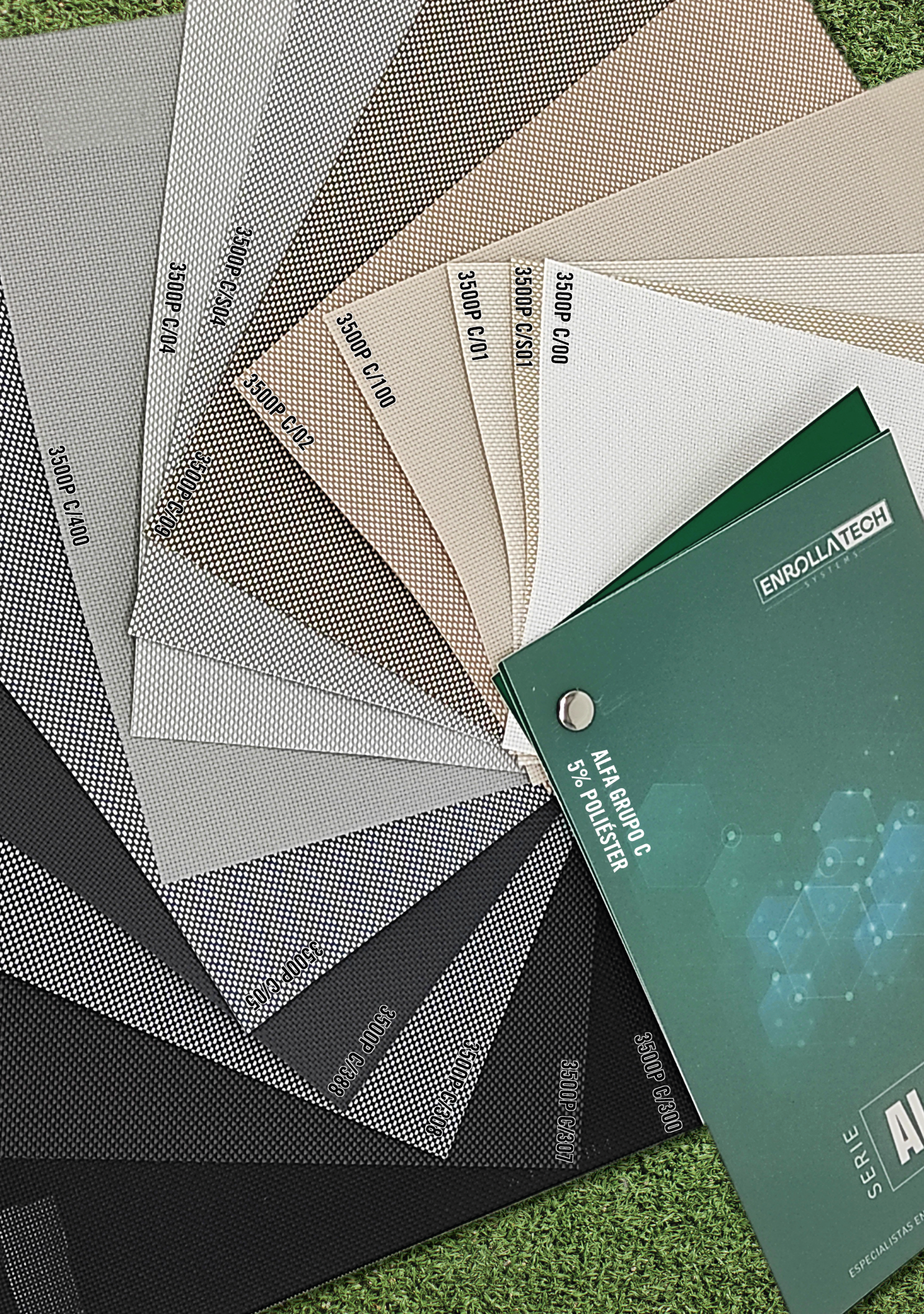
Precise Light Control
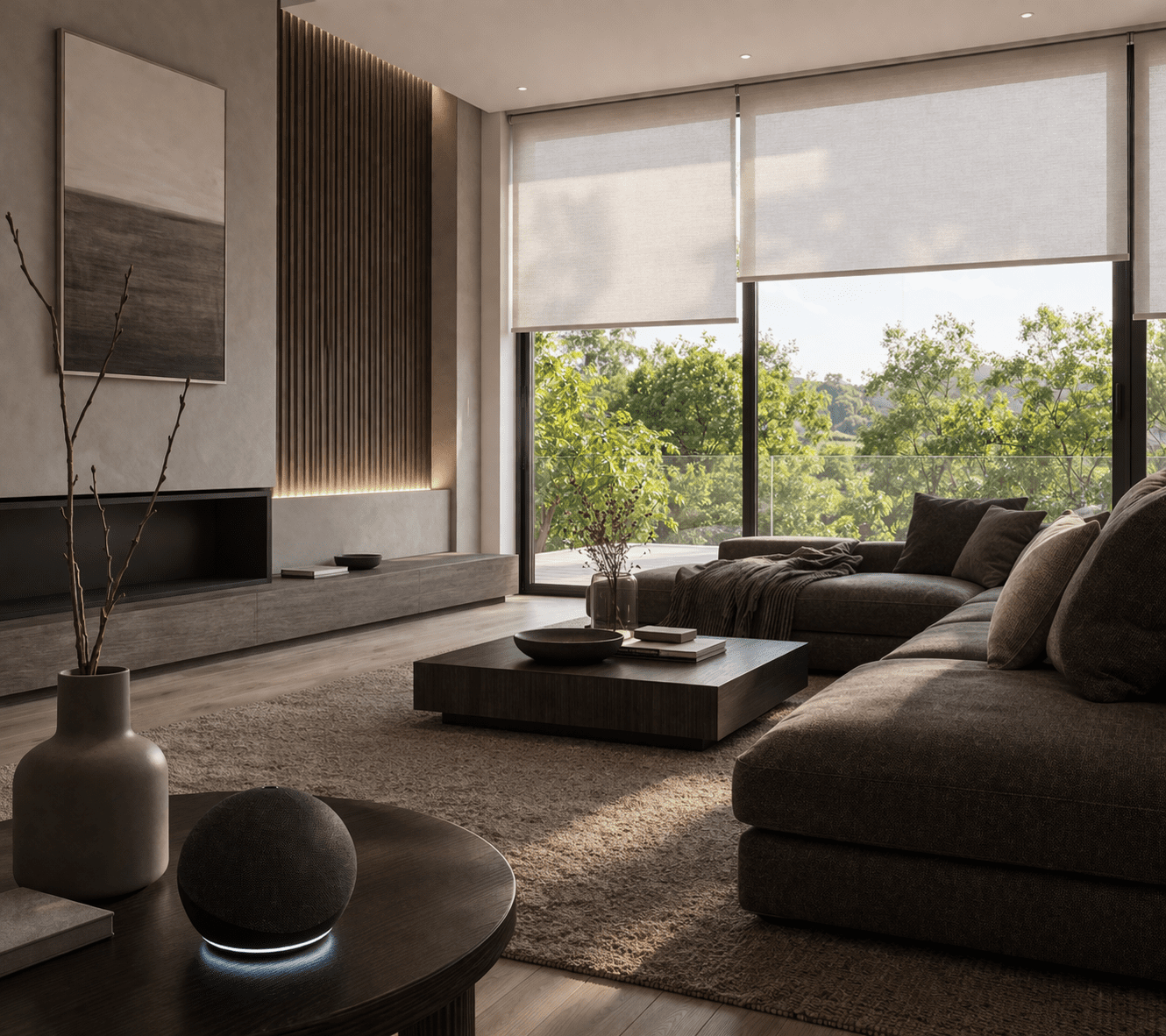
Technical fabrics are designed to provide controlled and predictable performance. Among the many options available, screen fabrics offer the best balance for controlling light without completely blocking it.
These fabrics come with different openness factors: 1%, 3%, 5% and 10%. The openness factor directly affects:
- The amount of light passing through the blind
- The level of outward visibility
- The degree of glare protection
How each openness factor works?
The openness factors affects the amount of light that can pass through the roller blind, the level of privacy and how much of the outside we can see. In the next table you can see the specific properties each openness has.
| Type of openness | Opennes factor | Characteristics |
|---|---|---|
| Low openness | 1% - 3% | More light control, reduced glare, increased privacy |
| Medium openness | 5% | Balanced visibility and light control |
| High openness | 10% | More natural light and visibility, less protection |
A bad fabric choice can cause big lighting problems. This is the reason why choosing the right openness is key for the visual comfort of the space, choosing functionality over aesthetic.
Light distribution and How to avoid contrast
One of the main issues in interiors is the difference in light intensity between lighted areas and shaded zones.
By selecting the right fabric, light can be diffused effectively, reducing contrast and creating a more uniform illumination. This is especially important in workspaces, offices, and environments with screens.

Applications for Different Spaces
As mentiones earlier, not all spaces have the same requirements. For that reason, visual comfort is not interpreted in the same way in every case. For example, for this different spaces, priorities change:

Offices
Minimize glare and control visibility

Homes
Balance between light and privacy
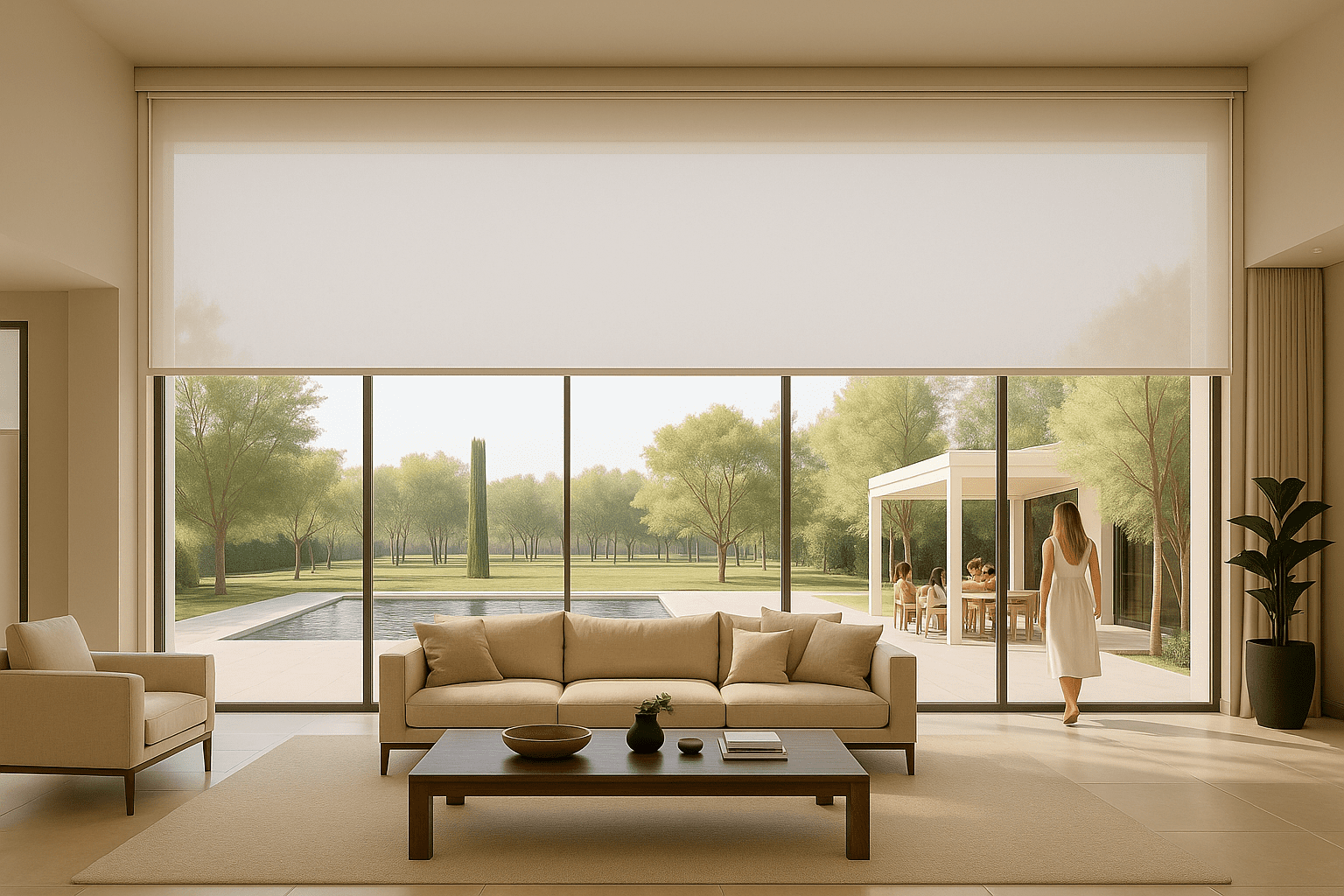
Large windows
Regulate incoming light
In all these cases, the fabric is the key factor that determinates the blind performance. There is no single fabric suitable for every situation. For that reason, making the right choice is essential.
Common mistakes
Choosing fabric based just on aesthetics is the most common mistake and it can lead to issues over time. Other frequent mistakes include:
- Choosing openness levels that are too hight for sun-exposed orientations
- Using opaque fabrics in spaces where brightness is desired
- Not considering how the space will be used
The result when we make any of this mistakes is a roller blind that is visually correct, but doesn't behave as we desire.
Choosing with technical criteria

There are several factors to consider when choosing the right fabric. Some of them are:
- Window orientation
- The use of the space
- Natural light levels
- Privacy requirements
The chosen fabric must respond correctly to all these factors. Only then will the blind truly perform as expected. A poor fabric choice will inevitably lead to problems sooner than expected.
Fabric choice: the key to a perfect performance
Visual comfort does not depend solely on how much light enters a room, but on how that light is managed and controlled. That is why fabric plays a fundamental role.
A good choice goes far beyond aesthetics. Is not just about design, but about a correct performance.


