
The problem is not always the blind itself
When a roller blind does not work as expected, one might initially think that the problem lies in the system itself. But in many cases, what happens is that it is not the right solution to our problem.
It may be perfectly made and installed and not respond tothe needs of the project despise that. When this happens, is because certain key factors have not been analysed.
In this article, we talk about some of the most common mistakes when choosing a roller blind. This way, you will be able to avoid them.
The first mistake: choosing based on aesthetics

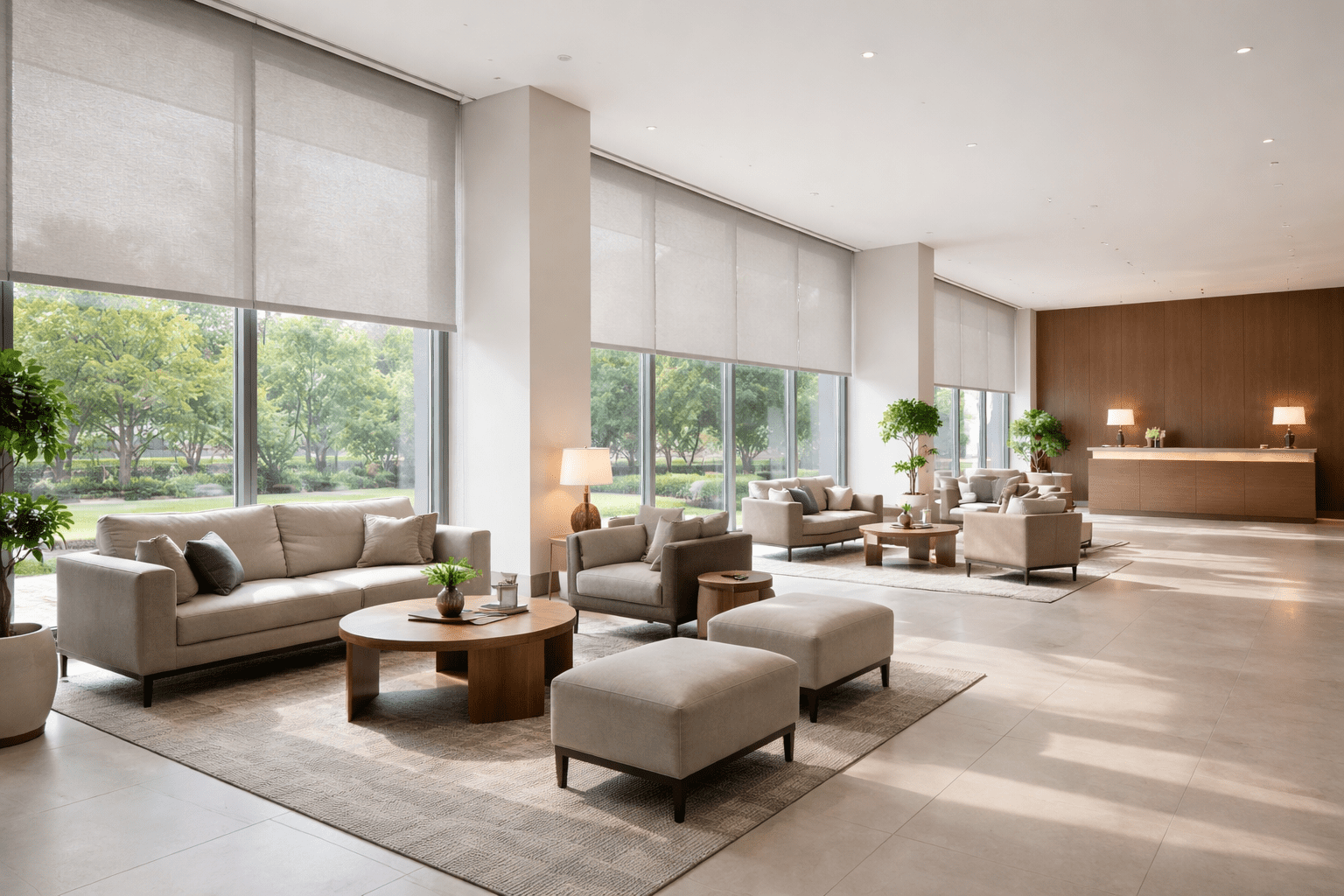
Sometimes in decorative projects, one is guided by aesthetics, without realising that this is one of the most frequent mistakes.
This happens especially when choosing the fabric. When we choose only thinking about colour or appearance, we are leaving aside the most important thing: how that fabric beheaves. Not all fabrics perform the same and, therefore, not all are suitable for every project.
An fabric that doesn't fit the project can lead to excess of light or a lack of it, loss of privacy or even reduced visual confort. This is not the only mistake we can make when it comes to choosing the fabric and we will take more into account, but if you want to know more in depth about this topic, you can read about it here.
Ignoring the openness factor in screen fabrics
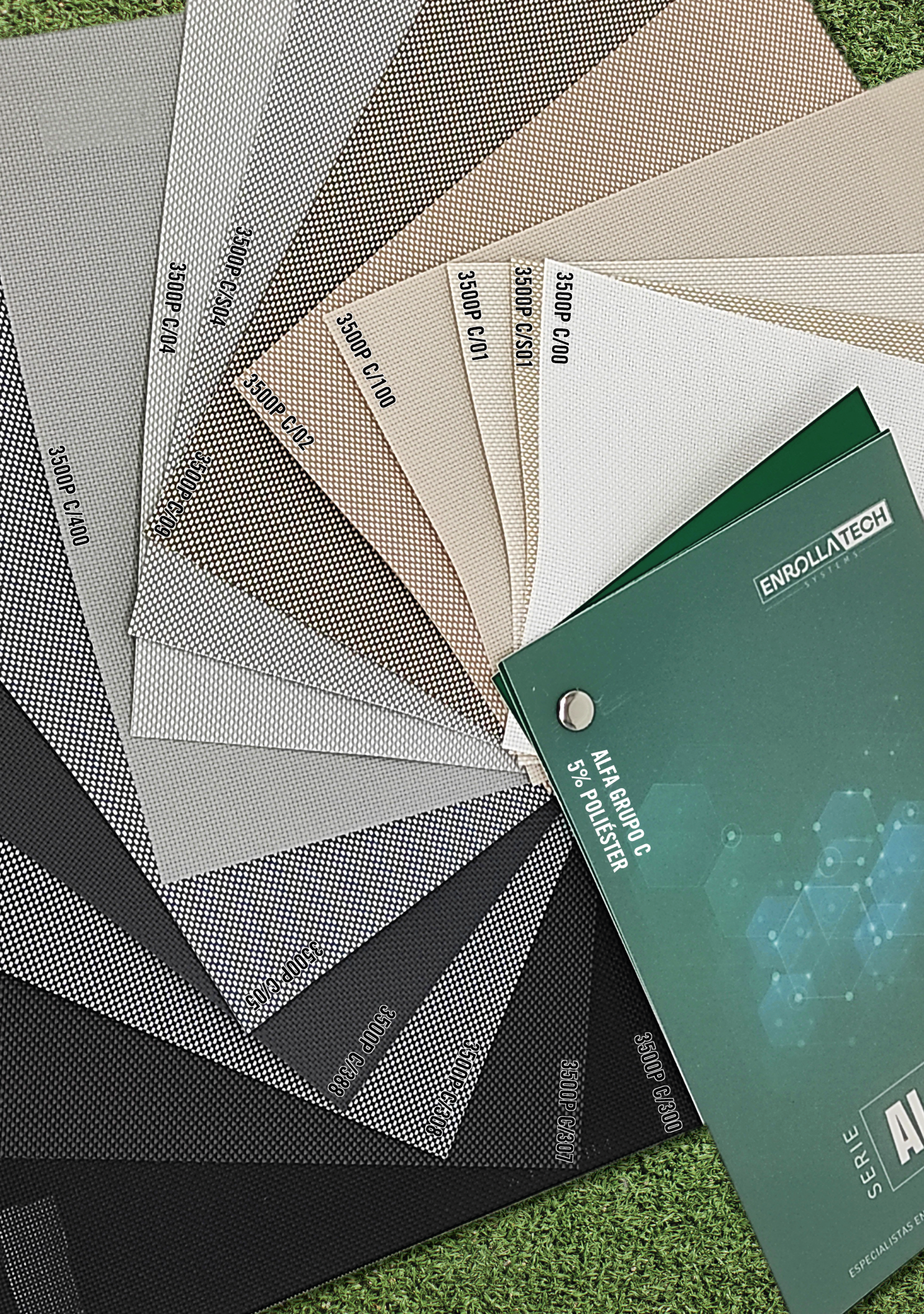
Technical screen fabrics hace different openness factors, the most common being 1%, 3%, 5% an 10%. These openness factors define how much light the fabric lets through, with the lowest filtering the least light and the highest allowing more ligth to pass through.
If we don't know which openness factor is suitable for each case, we may fall into mistakes and...
- End up with too much light entering the room (high openness factor)
- Lack of light or an overly enclosed feeling (low openness factor)
To correctly choose the openness factor, the orientation of the window and the level of external light must be taken into account. But something very important must also be analysed: the use of the space. If you want to know more about in what situations each screen type should be used, you can read about it here.
Not taking into account the real use of the space
It is obvious that decorating a living room is not the same as decorating and office. However, many times we do not think about what the space we want to decorate will be used for. An this is a cause of future problems.
This can end up leading to:

Glare
An especially concerning problem in work areas with screns.
Low light
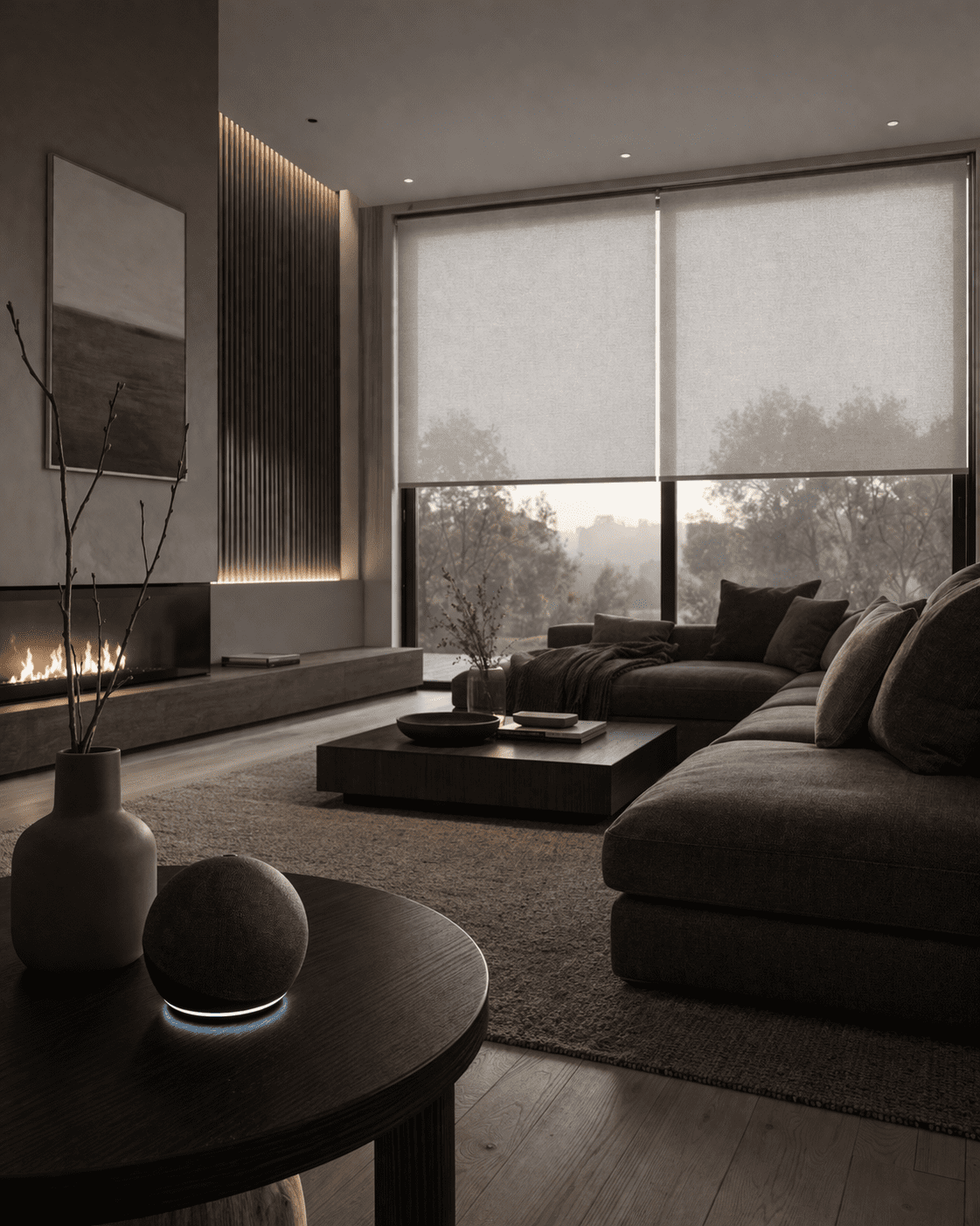
When natural light is desired, but low openness or blackout fabrics are chosen.

Too much light
Or also lack of privacy, two reasons that force you to constantly lower the blind.
When this happens, the space becomes conditioned by how the blind is used. A well-configured blind integrates perfectly with the space and fulfils its function without issue.
Mistakes in meadurements
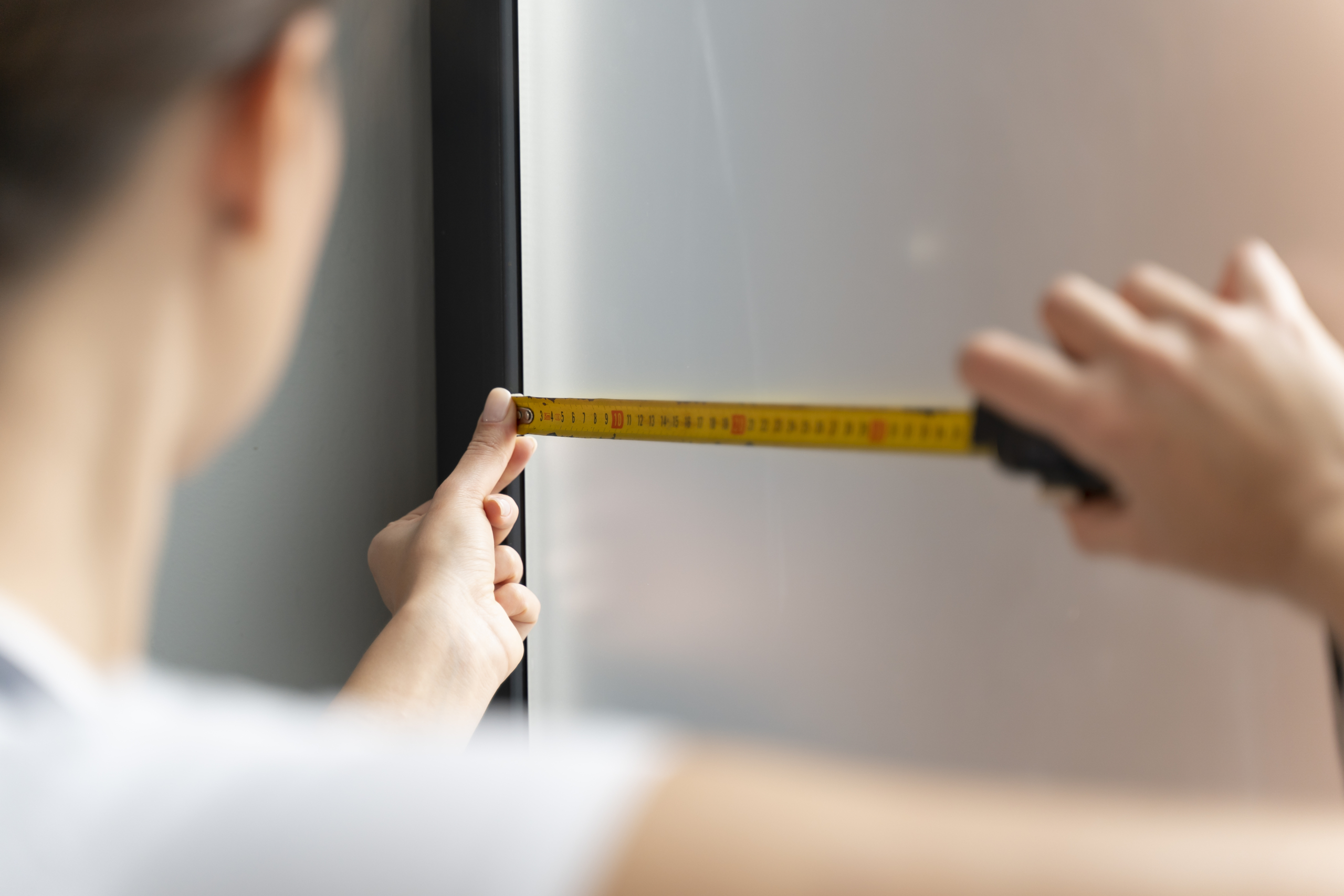
Measuring for installing a roller blind is an essential step. It is not complicated, but it must be donde perfectly. A mistake in the measurements can result in a major problem.
If our roller blind does not leave enough space on the sides, we measure only the window without taking into account what the blind will occupy, or we ignore obstacles, proper functioning cannot be ensure.
We will end up with unwanted light gaps or incorrect fit. This only guarantees a roller blind that does not meet the needs of our space.
Not knowing how to choose the right system
The use of the blind must be taken into account when choosing the operation method. There are cases where choosing manual operation instead of motorization ends up being a problem. For example:
- Blinds that are operated very frequently
- Large dimensions, where the weight of the blind makes manual operation difficult
- Cases where the blind requires to be in an exact position
An incorrect choice of operation method ends up affecting out comfort, as well as the durability of the system.
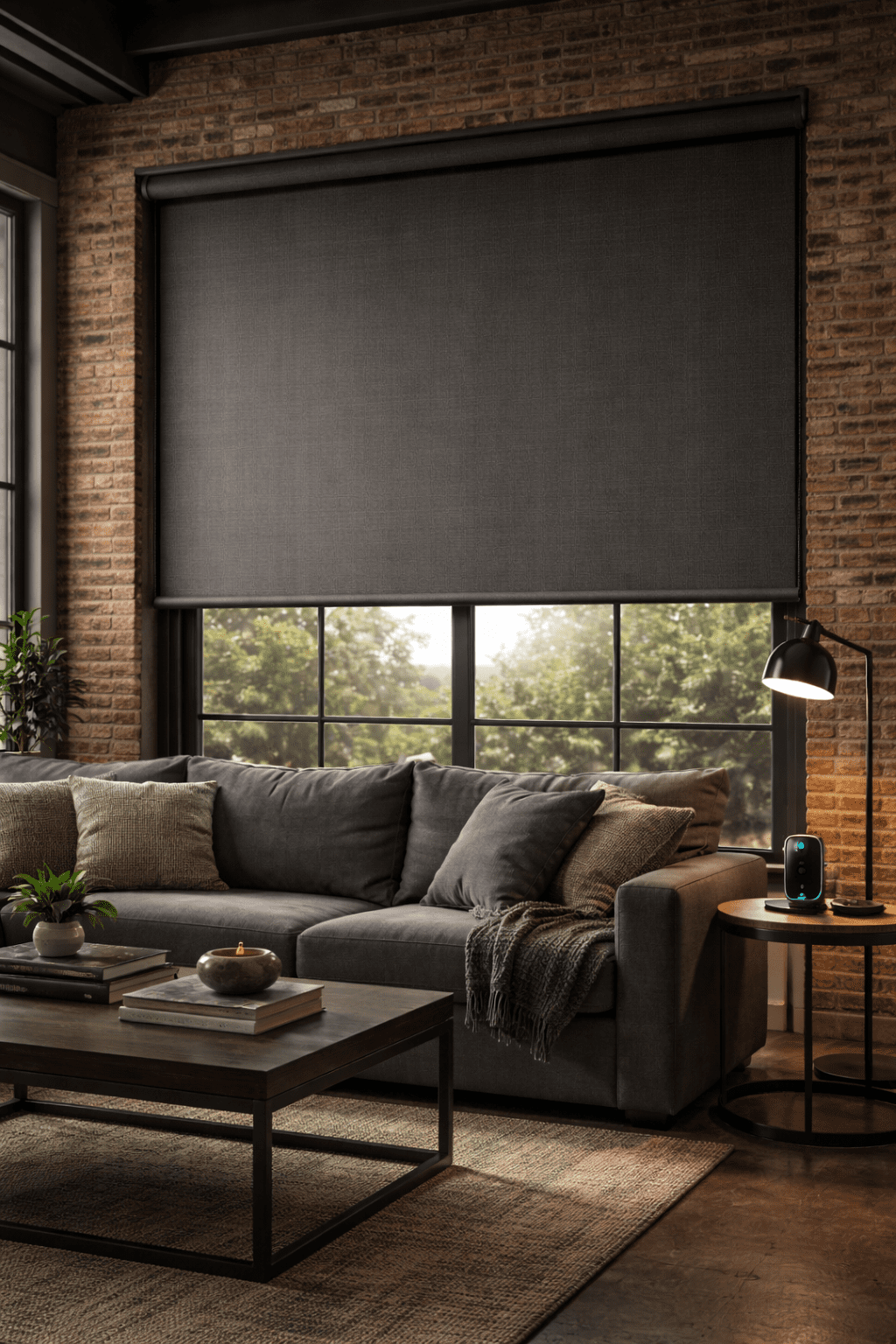
Trying to achive total darkening with systems that can not provide it
Another common mistake is expecting a performance that the chosen fabric cannot provide. If what we want is total darkness, then a suitable fabric must be chosen for that purpose.
If we try to achieve total darkness and privacy with fabrics that are not opaque, we will never achieve it. There are fabrics and systems designed to completely block light, which is very different from filtering it.
There are no "all-purpose" fabrics, which is why we must be very clear about the function of the fabric we choose. Only then we will avoid mistakes.
Compensating a poor choice with "patches"

One may think that a poor choice can be compensated in other ways. We end up adapting by doing things such as keeping the blind constantly lowered, combining it with other solutions or simply disguising its use.
At first, this may seem like a solution to our problem, but it is nothing more than a patch. The problem does not disappear, we have simply adapted to it.
Choosing correctly avoids problems
To avoid mistakes, it is essential to analyse each project, taking into account:
- The orientation of the window
- The use of the space
- The dimensions of the window
Only this way we will be able to choose correctly from the beginning the type of fabric, its openness factor and the mechanism. With this, we will avoid problems and ensure that the roller blind is a solution that fits both functionally and esthetically.


